
D. J. Cottrell
D. J. Cottrell
Although I have no background in horology I was once a toolmaker at a Borg-Warner factory that made automatic gearboxes. As well as making production tools and gauges to high tolerances inevitably some time was also spent investigating quality issues with the production of gears. Although I did not realize it at the time, this background was ideal for the challenge I put myself to create a tourbillon pocketwatch with a perfectly functioning movement to the design by Daniels, closely following the information in his book ‘Watchmaking’, where he describes the manufacture of a watch by hand with very basic tools.
Encouragingly he also points out that whilst sophisticated machinery is a great help, it is not essential to the making of the various parts of a watch. So, an old Unimat 3 lathe was retrieved from the garage and refurbished as best as possible. With the first major task was to devise a method of cutting wheels and pinions. This cost a tremendous amount of patience, followed by the next challenging step of making the first set of very small screws to secure the star wheel of the Geneva stop work. These were the first of numerous requirements that were outside the experience of my tool room apprenticeship and as a result often required several attempts and more than one re-think.
Pocket Watch No. 1

As a watchmaker in the full and original definition of the word, I create the designs and parts of my handmade watches, including every single screw, starting from raw materials. The only exceptions are the balance
spring and glass front. Working from my home workshop of circa 16 sq. meters in the heart of Somerset, United Kingdom, my working methods closely follow the Daniels method. The dragon engraving found on my timepieces, inspired by the coat of arms of Somerset, reflects my lifelong and personal connection to the area.
As a watchmaker in the full and original definition of the word, I create the designs and parts of my handmade watches, including every single screw, starting from raw materials. The only exceptions are the balance
spring and glass front. Working from my home workshop of circa 16 sq. meters in the heart of Somerset, United Kingdom, my working methods closely follow the Daniels method. The dragon engraving found on my timepieces, inspired by the coat of arms of Somerset, reflects my lifelong and personal connection to the area.
As a watchmaker in the full and original definition of the word, I create the designs and parts of my handmade watches, including every single screw, starting from raw materials. The only exceptions are the balance
spring and glass front. Working from my home workshop of circa 16 sq. meters in the heart of Somerset, United Kingdom, my working methods closely follow the Daniels method. The dragon engraving found on my timepieces, inspired by the coat of arms of Somerset, reflects my lifelong and personal connection to the area.
As a watchmaker in the full and original definition of the word, I create the designs and parts of my handmade watches, including every single screw, starting from raw materials. The only exceptions are the balance spring and glass front. Working from my home workshop of circa 16 sq. meters in the heart of Somerset, United Kingdom, my working methods closely follow the Daniels method. The dragon engraving found on my timepieces, inspired by the coat of arms of Somerset, reflects my lifelong and personal connection to the area.
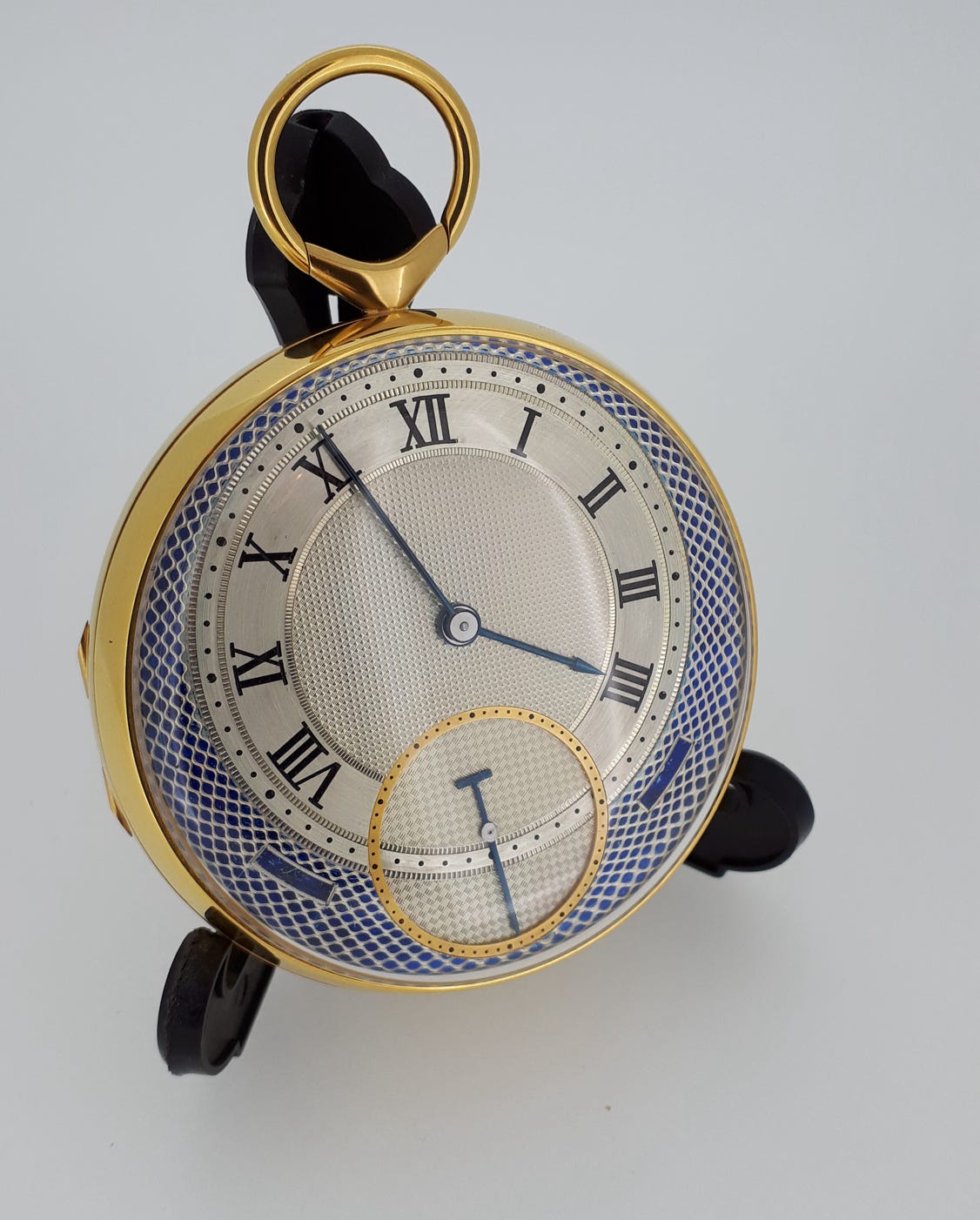
As a watchmaker in the full and original definition of the word, I create the designs and parts of my handmade watches, including every single screw, starting from raw materials. The only exceptions are the balance spring and glass front. Working from my home workshop of circa 16 sq. meters in the heart of Somerset, United Kingdom, my working methods closely follow the Daniels method. The dragon engraving found on my timepieces, inspired by the coat of arms of Somerset, reflects my lifelong and personal connection to the area.As a watchmaker in the full and original definition of the word, I create the designs and parts of my handmade watches, including every single screw, starting from raw materials. The only exceptions are the balance spring and glass front. Working from my home workshop of circa 16 sq. meters in the heart of Somerset, United Kingdom, my working methods closely follow the Daniels method. The dragon engraving found on my timepieces, inspired by the coat of arms of Somerset, reflects my lifelong and personal connection to the area.
That first pair of usable 0.5mm screws was something of a personal achievement for me. One easily forgets the humble screw is central to the very heart of watchmaking, and when creating each one by hand, I came to the realisation that every screw requires some 20-odd steps before it is perfectly completed!
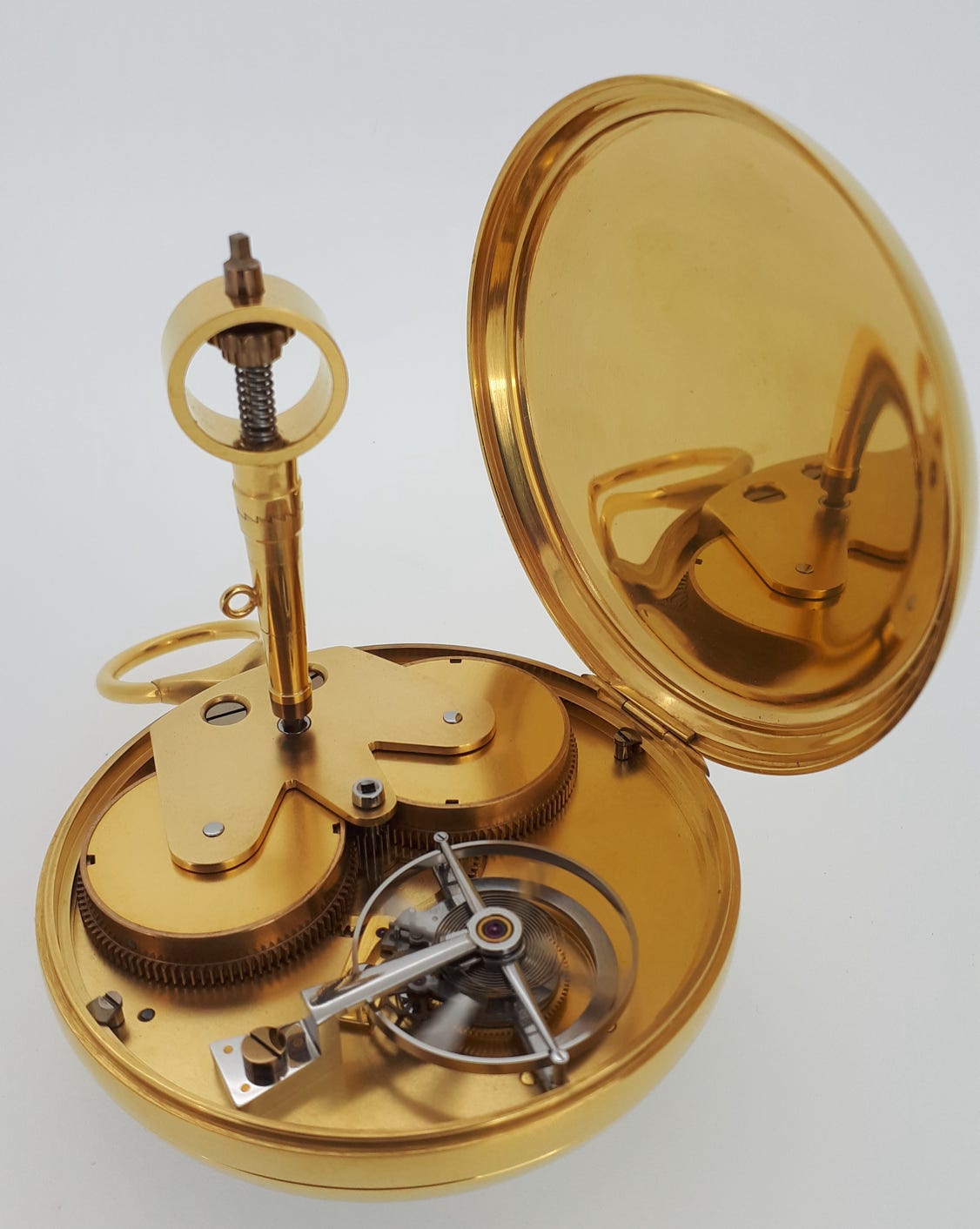
I had chosen to challenge myself even further by fitting the tourbillon with a Daniels Co-axial escapement and making the lever to the required tolerances was proving difficult without access to an accurate jig borer. It looked as though this component had the potential to bring work on Pocketwatch No. 1 to a halt if a solution could not be found.
‘Watchmaking’ details the geometry of the Co-Axial escapement and tells you how to draw out the mechanism to a large scale from which dimensions can be taken. However, it became clear within five minutes that my ability to mark out accurately and then drill the required holes in a rather small piece of steel a few millimetres across was just not going to happen.
In the end, I spent a number of months’ worth of ‘spare time’ refurbishing a BCA jig borer and designing a new spindle for it based around precision angular contact bearings. Fittings were also made to attach Mahr digital dial gauges to the X and Y axis. This in combination with a sensitive drilling quill and microscope made the manufacture of the lever far more certain and quicker. The Co-Axial lever went through a number of iterations before errors in interpretation of geometry as well as making were ironed out, and eventually version 12 was fitted to the movement and finally it ticked in a much more satisfactory manner and continues to do so today.
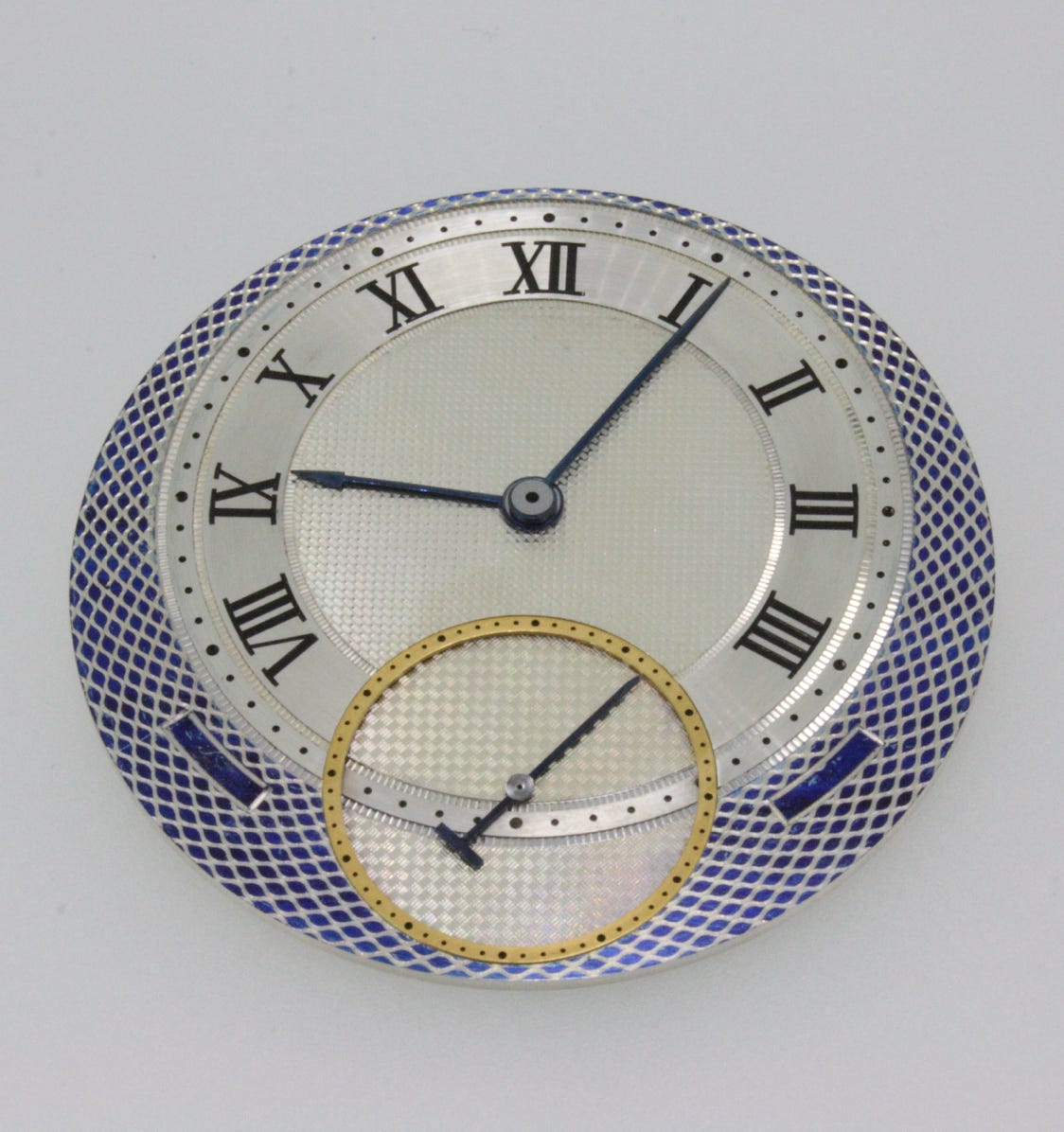
With the movement happily ticking away, the question of how to make the dial needed to be addressed. It had already been decided that the dial should be engine turned (guilloche) and made from silver. In an ideal world both a straight-line and rose engine would have been acquired, however it proved difficult to track down suitable machines with sufficient accuracy. By a timely coincidence a series of related articles appeared in the HJ written by John Moorehouse. These covered his work on engine turning' together with an outline of his equipment. On making contact with John he kindly invited me to his workshop where he had devised an attachment that enabled rose patterns to be cut on a Plant straight line engine.
Encouraged by what John had achieved the decision was made to design a custom machine based on his general principles that would cut both straight line and rose patterns, including the ability to recess sub-dials together with the drilling of index markers or other features without disturbing the dial. (Further detailed information about my design and implementation of my ‘Straight Rose Engine’ can be found here under Craftsmanship).
As expected, the design and making of this unit, together with learning how to use it and the inevitable further refinements took more than a year. In the final result, the machine proved its value in more ways than one. Not only could the dial, including subdials now be made in one piece; the engine also proved capable of engraving the numerals on the dial, as well as patterning the curved back of the case.
The largest parts to be created for my Pocketwatch No. 1, such as the case, bezels, winding key and other such details were, in retrospect, much more easily realised in comparison to so many of the above-mentioned parts. Although everything in horology requires the development of special skills, when it comes to working by hand, it is inevitable that the smaller parts become, the challenge in creating them increases.
